
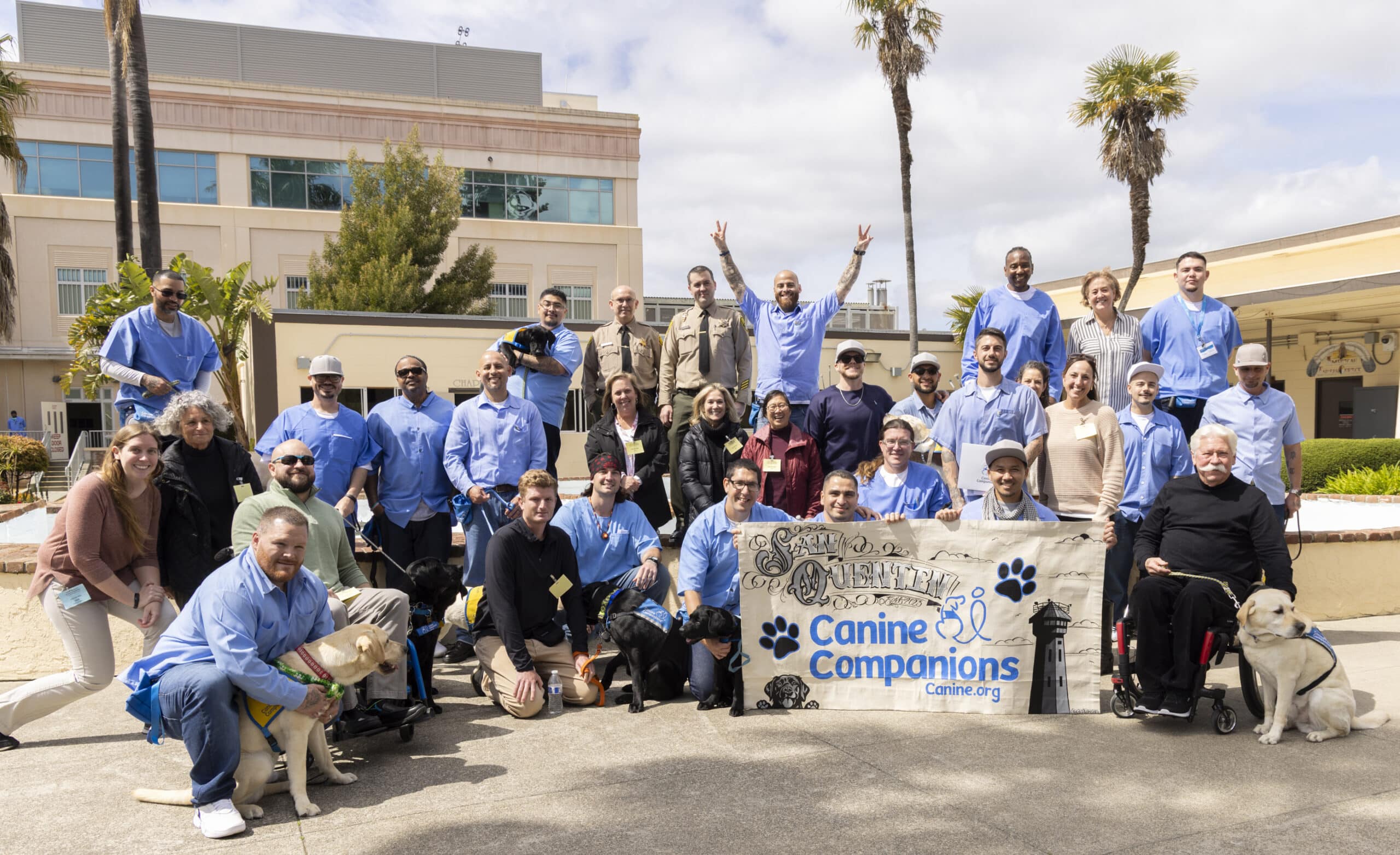
 In 1995, the first Canine Companions Prison Program started at Coffee Creek Correctional Facility in Wilsonville, Oregon. It has since expanded to include 25 facilities across the United States. Over 1,500 incarcerated volunteer puppy raisers have participated, with over 300 currently raising future service dogs for Canine Companions.
We work with the prisons to identify people who are ready to give back to the community through our puppy raising program. Our Prison Program policy includes requirements for eligibility, many of which involve the individual’s conviction.
“We do not allow anyone whose crime involves abuse towards minors or animals — including any crime of a sexual nature,” said Canine Companions CEO Paige Mazzoni. “Those are crimes against the vulnerable, so we will not allow them to be with a puppy who is vulnerable.”
Canine Companions created the modern service dog concept in 1975 and has raised, trained and placed more than 8,300 service dogs over the last 50 years. Currently, the service dog industry is facing a national shortage of service dogs that can be solved only by recruiting more volunteer puppy raisers.
Incarcerated adults can focus on the training of future service dogs until they are old enough to return to Canine Companions for training by professionals. Primarily, this is due to the structure of these intensive programs. Outcomes show that dogs raised in these programs have a higher rate of being successfully matched with a client. It cannot be understated that there is a significant benefit for the incarcerated participants who raise future service dogs. In fact, participants in these rigorous programs have lower recidivism rates than the general incarcerated population.
“We receive letters from the incarcerated puppy raisers that show the personal changes first hand, through sentiments such as, ‘It’s the first time I felt unconditional love,’ and, ‘It’s my chance to give back to society,’” Mazzoni said.
“I know puppy raising is life-changing for the people who receive the dogs I’ve raised after they’re fully trained service dogs. But I never thought my life would be impacted so dramatically by caring for these dogs. It’s set me on a path for the future that I didn’t know was available for me,” shares Kareem Sims, a formerly incarcerated puppy raiser who is now employed as a Canine Companions puppy field representative.
The program encompasses federal, state, and private institutions, including the notable San Quentin Rehabilitation Center in California, and continues to expand nationwide.
In the news:
NBC News* article: https://nbcnews.to/3UfibU3*
*Please be aware that by clicking this link you are visiting a site that is not managed by Canine Companions. Website security, accessibility and privacy policies may be different than Canine Companions policies. Please read their policies closel